
Hip Replacement
Rehabilitation in Patna, Bihar
Hip replacement surgery can help patients regain movement when hip joint problems start affecting daily life. However, post-surgical rehabilitation plays an important role in helping the body adapt, rebuild muscle control, improve walking ability, and regain confidence during routine activities. Recovery involves gradual progress through suitable exercises, movement practice, and strength development based on the patient’s current abilities.
At Mission Walk & Run, Physio Ortho Neuro Rehab Centre in Rajeev Nagar, Patna, rehabilitation after hip replacement is planned by considering each patient’s movement challenges, physical condition, and functional goals. The program may include supervised exercises, mobility improvement activities, balance training, and strength-building techniques. Under the guidance of Dr. Manish Kumar, with 6 years of physiotherapy experience and 10,000+ patients treated, the focus remains on creating personalised rehabilitation strategies that support safe and progressive recovery.
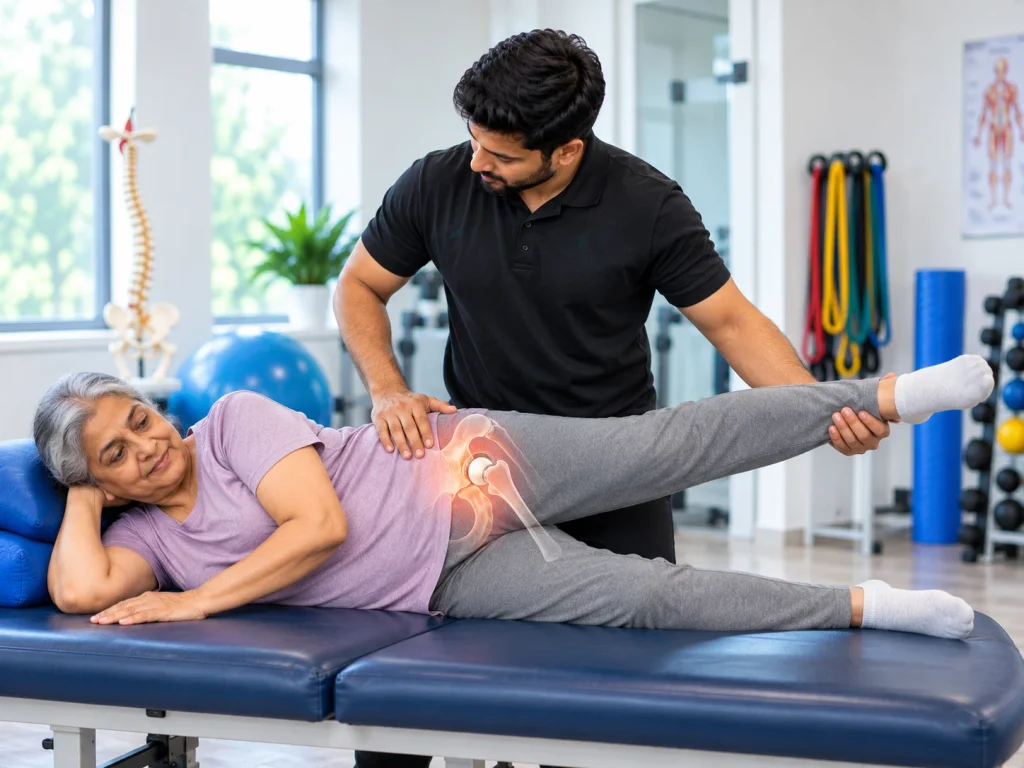
Understanding Hip Replacement Rehabilitation and How Mission Walk & Run Supports Recovery
Common Causes of Hip Replacement Rehabilitation
Hip replacement is generally recommended when damage to the hip joint affects movement, causes discomfort, and limits daily activities. After surgery, rehabilitation becomes important to help the body adapt to the new joint and restore functional movement.
Common reasons that may lead to hip replacement include:
- Advanced hip osteoarthritis causing joint wear
- Long-term knee pain affecting daily function
- Reduced knee mobility and stiffness
- Previous knee injuries causing joint damage
- Joint deformity affecting movement patterns
- Age-related changes in the knee joint
After surgery, the surrounding muscles may become weak due to reduced activity. Rehabilitation helps patients work on strength, flexibility, balance, and movement patterns needed for walking and daily tasks.
Symptoms and Problems Associated With Hip Replacement Rehabilitation
After hip replacement surgery, patients may experience temporary movement difficulties while the body heals and adapts. These challenges can affect walking, balance, and confidence during daily activities.
Common rehabilitation-related difficulties may include:
- Hip stiffness and reduced mobility
- Weakness in hip and leg muscles
- Difficulty walking without support
- Reduced balance and stability
- Challenges climbing stairs
- Difficulty performing daily movements
- Reduced confidence while moving
The recovery process can vary between individuals depending on factors such as age, physical condition, surgical recovery, activity level, and consistency with rehabilitation.
Who Can Benefit From Hip Replacement Rehabilitation?
Hip replacement rehabilitation in Patna may benefit individuals who need support after surgery to improve strength, mobility, and independence.
Patients who may benefit from rehabilitation include those who:
- Have recently undergone hip replacement surgery
- Experience stiffness or weakness after surgery
- Need support improving walking ability
- Want guidance with hip replacement rehabilitation exercises
- Have difficulty returning to daily activities
- Need help improving balance and movement control
A rehabilitation plan is adjusted according to the patient’s physical abilities, recovery stage, and functional goals rather than using the same routine for everyone.
Who Can Benefit From Cervical & Neck Pain Physiotherapy?
Cervical and neck pain physiotherapy may be suitable for people experiencing recurring neck discomfort, stiffness, reduced cervical mobility, posture-related problems, muscle tightness, or movement difficulties.
It may also be useful for:
- Office and computer users
- People with prolonged sitting habits
- Individuals experiencing neck and shoulder stiffness
- Patients recovering from certain neck injuries
- People with reduced neck flexibility
- Individuals whose neck discomfort affects everyday activities
Patients with severe, sudden, or unusual symptoms should seek appropriate medical evaluation rather than relying only on self-directed exercises.
Patient Testimonials
See how Mission Walk and Run has made a difference in the lives of our patients
EXCELLENT Based on 9 reviews
 Posted on Google

 Varsha SharmaI had a very good experience at this physiotherapy clinic. The therapist is professional, knowledgeable, and very supportive. They explained the problem clearly and guided me through the exercises and treatment properly. The clinic is clean, well-maintained, and has a positive environment. I would definitely recommend this clinic to anyone looking for effective and professional physiotherapy treatment.Posted on Google
 ranjana kumariI got relief in my knee pain.Posted on Google
 Baliraj SinghGreat 👍 Great work Advance technology used for exercise, Got relief from painPosted on Google
 Mani Bhushanघुटनों के दर्द में बहुत आराम मिला। वहाँ के लोग अच्छी सर्विस दिए।Posted on Google
 reena singhBest physiotherapist in this centre got relief in Frozen shoulderPosted on Google
 Abhijeet KumarBest rehabilitation centre in patnaPosted on Google
 Reetu singh Rajput“It was my first visit to physiotherapy. The physiotherapist listened to my problem patiently and explained the exercises properly. The staff was polite and helpful. Overall, it was a good experience.”Posted on Google
 Ranjan YadavGood 👍🏻Posted on Google
 Pradeep VashisthaBest physiotherapy centre in Patna I got relief in my neck pain thanks to mission walk & run team👍👍
Expert Physiotherapy Care for Hip Replacement Recovery
Hip replacement recovery requires a gradual rehabilitation approach where exercises are selected according to the patient’s healing stage, mobility level, and physical condition. The program focuses on improving hip movement, muscle strength, walking ability, balance, and functional independence.
The rehabilitation program may include:
- Hip joint mobility exercises
- Gentle stretching and flexibility training
- Walking and gait training
- Balance and coordination exercises
- Exercise progression according to recovery stage
- Guidance for safe daily movements
Hip replacement rehabilitation exercises are introduced according to individual progress, with early stages focusing on basic movement and muscle activation, while later stages may include advanced strengthening and functional activities.
Modern Physiotherapy Facilities for Effective Hip Replacement Rehabilitation
A supportive rehabilitation environment helps patients perform exercises safely and improve physical abilities gradually. Physiotherapy after hip replacement may include exercise-based rehabilitation along with suitable equipment and movement training.
Depending on individual requirements, rehabilitation may involve:
- Guided hip replacement surgery exercises
- Mobility and flexibility training
- Strength development activities
- Balance and coordination exercises
- Walking and functional training
- Exercise progression according to recovery
A hip replacement physiotherapy assessment helps determine which exercises and rehabilitation techniques are suitable for the patient’s condition.
Why Choose Mission Walk & Run for Hip Replacement Rehabilitation?
Hip replacement rehabilitation focuses on understanding the patient’s condition, movement limitations, recovery stage, and functional goals. The approach combines professional assessment, guided exercises, and structured rehabilitation to support improvements in mobility, strength, and daily movement.
Personalised Hip Rehabilitation Assessment
A detailed evaluation helps identify hip movement restrictions, muscle weakness, balance challenges, flexibility issues, and functional difficulties before planning rehabilitation.
Structured Rehabilitation Planning
The rehabilitation plan is developed according to the patient’s symptoms, physical abilities, recovery stage, and individual recovery goals.
Guided Knee Replacement Rehabilitation Exercises
Patients receive professional guidance to perform suitable exercises with correct technique, appropriate intensity, and gradual progression during recovery.
Strength and Mobility Training
The rehabilitation program focuses on improving hip strength, mobility, flexibility, balance, and movement control to support better performance in daily activities.
Ready to take the next step?
Book your physiotherapy session today and start your session journey towards a pain-relief life
Personalised Hip Replacement Rehabilitation at Mission Walk & Run
Physiotherapy Evaluation for Hip Replacement Rehabilitation at Mission Walk & Run
A detailed evaluation after hip replacement helps assess the patient’s movement ability, muscle strength, flexibility, balance, and challenges affecting daily activities.
The assessment may include:
- Hip range of motion evaluation
- Muscle strength assessment
- Walking pattern analysis
- Balance and stability evaluation
- Functional movement assessment
- Difficulty with sitting, standing, or walking
- Lower-limb movement assessment
- Posture and movement pattern review
- Activity limitations evaluation
These findings help create a personalised rehabilitation plan based on the patient’s condition, functional goals, and recovery stage.
Physiotherapy-Based Hip Replacement Rehabilitation Management at Mission Walk & Run
After hip replacement, rehabilitation focuses on restoring movement, improving strength, and helping patients return to daily activities safely. A total hip replacement physiotherapy assessment helps determine the appropriate exercise level and rehabilitation strategy.
The treatment approach may include:
- Exercise for hip joint mobility
- Hip joint strengthening exercises
- Hip joint physiotherapy exercises
- Walking and gait training
- Balance improvement exercises
- Functional movement activities
Hip surgery rehabilitation exercises are progressed according to the patient’s ability and response. Early stages may focus on gentle movement and muscle activation, while later stages may involve strengthening and activity-based exercises.
The rehabilitation program is adjusted according to individual progress rather than following a fixed routine for every patient.
Benefits of Hip Replacement Rehabilitation Treatment
Physiotherapy after hip replacement can support patients in improving mobility, strength, balance, and independence during recovery. The progress may vary depending on individual health conditions, surgical recovery, and consistency with rehabilitation.
Possible benefits include:
- Improved hip mobility
- Better muscle strength
- Improved walking ability
- Increased confidence during daily activities
- Better balance and coordination
- Support for returning to daily activities
A structured rehabilitation program helps patients understand suitable exercises, safe movement strategies, and activity modifications that support recovery.
FAQs About Hip Replacement Rehabilitation
Typical hip replacement rehabilitation includes exercises and movement training designed to improve hip mobility, strengthen surrounding muscles, improve balance, and restore walking ability. The program usually progresses according to the patient’s recovery stage and physical condition.
The most suitable rehabilitation approach depends on the patient’s individual condition. A structured program that includes mobility exercises, strengthening, walking practice, balance training, and functional movements can support recovery after hip replacement.
Suitable exercises after hip replacement may include gentle hip mobility movements, strengthening exercises, walking practice, balance activities, and functional exercises. The exercises should be selected according to the patient’s recovery stage and physical ability.
The appropriate exercise for joint pain depends on the affected joint, cause of pain, and individual condition. Low-impact mobility exercises, strengthening activities, and guided rehabilitation exercises may help improve joint function when appropriate. A physiotherapy assessment can help identify suitable exercises for specific needs.
The duration of hip replacement rehabilitation varies depending on the patient’s age, physical condition, surgery recovery, mobility level, and response to physiotherapy. The rehabilitation timeline is adjusted according to individual progress, with exercises gradually advanced as strength, balance, and functional movement improve.